|
 |
For Release
October 1, 2023
TCU Grand Lodge Announces
the Promotion of Steven Wilhlem |
|
Effective October 1, 2023, TCU/BRC Heartland Lodge 6760
member Steve Wilhelm has been promoted to the position of
Chief of Staff of the Transportation Communications Union/IAM.
Brother Wilhelm will work closely with TCU National
President Arthur Maratea, officers, and staff at the
National Headquarters.
After serving his country in the United State Marine Corp,
Steve Wilhelm began his rail career January 19, 1993, with
Norfolk Southern at Fort Wayne, Indiana. Early in his career
Steve became interested in union activities. He accepted his
first union appointment as Secretary of the Local Protective
Committee in June 1997. It did not take long for the Lodge
to realize Steve's talents. Later that year he was elected
as Recording Secretary of Lodge 6760. As Steve's union
experience grew, he was given more responsibilities. In
February 2002, after the lodge had eight lodges merge into
6760 making it the second largest lodge in the United
States, Steve was promoted to Assistant Local Chairman of
the Lodge to help with the huge influx of work at the local
level. In June 2003, he was again promoted as Senior
Assistant Local Chairman to assist with formal
investigations. During his first investigation as lead
chair, a hearing officer became so infuriated by Steve’s
skills he accused the lodge of hiring him as a lawyer. The
local chairman replied to the hearing officer ‘You better
get ready for the future.’ In 2004, Steve spent the entire
year mirroring the local chairman, both in the office and on
the road, which led him to being elected as Lodge 6760’s
tenth local chairman effective January 1, 2005. Just eleven
months later Steve was elected as 3rd Vice General Chairman
of Joint Protective Board 200. In January 2008 Steve Wilhelm
was reelected to a second term as Local Chairman. With a
near photographic memory, Steve Wilhelm has been described
by his Local Chairman predecessor, Steven Pequignot as "a
person you train one day, then learn from thereafter."
On November 1, 2009, Steve was appointed to the office of
Assistant National Representative. He worked with National
Representative Roger Cain, handling cases and negotiating
contracts for members of TCU Unit 200.
On December 16, 2010, Steve Wilhelm received an award from
Vice Local Chairman Kevin Hite, on behalf of the members of
Lodge 6760 for the skills he demonstrates while representing
lodge members and keeping the union a strong and united
organization. Steve Wilhelm became the first member of Lodge
6760 to assume an International Office of the union. Since
then, he has been successful with many claim award cases on
behalf of the members.
Effective June 1, 2012, Steve was promoted by Past National
President Robert A. Scardelletti to the office of Director
Constitution & Laws. For that promotion Steve moved to TCU
Headquarters in Rockville, Maryland, to work directly with
past Senior Executive Director Constitution & Laws, Dennis
O’Malley until his retirement, when Steve was then promoted
to Executive Director Constitution & Laws. Steve held that
office for eleven years until this promotion.
Steve Wilhelm has been a gift to Lodge 6760. He has
represented our members above and beyond the call of duty.
We are pleased to share him and his experience with the
Grand Lodge.
The officers and members of BRC/TCU/IAM Heartland Lodge 6760
wish Steve Wilhelm continued success in his journey
representing our members.
###
|
|
For Release
July 31, 2023
The Proposed REEF Act |
The following link is an article
published by the Grand Lodge regarding the REEF act being
proposed in congress currently. The REEF act, if passed
would eliminate the sequestration of the RRB which cuts 5-6%
to RRB benefits that we've been subjected to for the last 10
years or so. These cuts affect us all whether on sickness
benefits or unemployment benefits. Please click the link in
the middle of the page that says "click here to take action"
to send pre-written letters to your senators and
representatives to push them to vote in favor of this bill.
Additionally, the link below is
a direct link to the action network outlining major budget
cuts to Amtrak, Commuter Rails, and a 30% cut to the
Railroad retirement board budget itself. Imagine how
difficult it would be filing for unemployment, sickness
benefits, and retirement benefits with a 30% cut in their
budget which goes directly to administrating those
benefits. Please click the link below and send pre-written
letters to your representatives and tell them to oppose
these cuts.
https://actionnetwork.org/letters/tell-your-reps-no-cuts-to-the-railroads/
Thanks,
James M. Ramey
Local Chairman/Lodge 6760
Unit 410 BRC Division-TCU/IAM
|
|
For Release
July 10, 2023
Honoring Our Veterans |
|
TCU/BRC are HONORING ALL VETERANS. Since our forefathers founded
this country, America’s military has battled to keep us safe. To
honor our veteran members, starting in September, TCU will begin
shining the spotlight on a “Veteran of the Month.”
Click here to read how it works. |
|
For
Release
June 30, 2023
Keeping Dues Current While on Sick Leave or Furlough
Revised March 6, 2024 |
|
Sisters and Brothers:
Click here to read information for keeping dues current
while off on sickness or furlough. Given all the recent issues
with delinquent dues, I decided to create this document so we
can provide to all members that go off work for any reason and
inform them properly of how to handle this issue going forward.
Please provide to the members at your prospective locations and
let me know if you have any questions.
Thanks,
James M Ramey
Local Chairman/Lodge 6760
Unit 410 BRC Division-TCU/IAM
Email: jamesramey2008@hotmail.com
Phone: (740) 285-5933
www.tcu6760.com
|
|
For Release
June 18, 2023
East Palestine Derailment and Railroad Safety |
|
The link below is to a short documentary released earlier
this past week regarding the East Palestine derailment and
PSR. Several former NS employees including former Carmen
interviewed for this documentary along with BRC President
Grissom. I know some of you have already watched this
video. But for those who haven't, watch it when you get a
chance and all of you, please share it with your coworkers
if you can.
In solidarity,
James M. Ramey
Local Chairman/Lodge 6760
Unit 410 BRC Division-TCU/IAM
|
|
For Release
May 18, 2023
Railway Safety Act of 2023 |
|
Sisters and Brothers,
Received the message from the national reps with the following
statement:
“Complete and share link below to as many Members as
possible…quickly. It’s fast and easy and necessary. Just click
the link below. Also, please suggest that all members call
their congressman and senators in support of this bill. We have
fought for years against the dangerous profiteering policies of
PSR. This Legislation will go a long way to rectify some of the
issues in this industry and help bring forth some of the changes
we’ve all thought were necessary for quite some time.”
Attached is a senate contact lists. You can also use
the U.S. Capitol Switchboard operator which can connect you
directly with the Senate office. (202) 224-3121
The following link contains contact information to all
Representatives in the house:
https://www.house.gov/representatives
The following link is an action network letter sponsored by our
Unions Rail Division. This link will take you to a form letter
where you can either write your own letter, add your own words
to the existing letter, or submit the form letter as is to your
local Senators and Representatives.
https://www.tcunion.org/tcu-union/railway-safety-act-passes-committee-heads-to-senate-floor/
Message from TCU National President
Artie Maratea:
The IAM Rail Division applauds the
bipartisan vote to approve the Railway
Safety Act of 2023 as amended by Chair Maria
Cantwell (D-WA) and Sen. J.D. Vance (R-OH). The legislation will
now head to the Senate floor for a full vote.
This bill would
provide major work-life improvements for our Carmen and
Machinists crafts by prohibiting the railroads from imposing
time constraints on rail car and locomotive inspections. In
addition, the bill ensures that our highly-skilled and qualified
members are the ones conducting these inspections, rather than
relying on operating crews or other untrained crafts.
“I applaud the bipartisan efforts of
Chair Maria Cantwell (D-WA) as well as Ohio Senators J.D. Vance
(R-OH) and Sherrod Brown (D-OH), and all the other Senators that
have agreed to cosponsor this important legislation. Without
their sense of urgency after the tragedy in East Palestine, we
wouldn’t have such a timely and strong legislative response.
However, we cannot and should not delay with this legislation,
therefore I urge Leader Schumer to put this bill on the Senate
floor as soon as possible,” said
TCU National President Artie Maratea.
Thanks,
James M Ramey
Local Chairman/Lodge 6760
Unit 410 BRC Division-TCU/IAM
Email: jamesramey2008@hotmail.com
www.tcu6760.com
|
|
For Release
March 30, 2023
Railroads Are a Lot More Efficient. Are They Also Less Safe? |
|
Railroads Are a Lot More Efficient. Are They Also Less Safe?
Norfolk Southern cut railcar inspection time to a minute. A
‘hurry up and get it done’ mentality.
By Esther Fung
March 30, 2023 11:16 am ET
In the world of railroading, keeping the trains moving is
paramount, and Norfolk Southern Corp. has little tolerance for
late departures. Supervisors can be penalized for trains that
are ready to leave but instead sit in rail yards, according to
current and former employees of the Atlanta-based railroad.
Train inspection time frames are tight. Employees who seek
more-stringent reviews of rail equipment or slow down transport
can face discipline.
Scott Wilcox, a sixth-generation railroader who is retired from
Norfolk Southern, said its railcar inspectors used to have five
to eight minutes to check a car’s wheels and brakes for problems
like leaky bearings or damaged components. Now they often have
between 30 seconds and a minute, he said.
“So basically all they’re doing is connecting air hoses between
the cars for the brake system and that’s it,” Mr. Wilcox said.
“They don’t have time to do anything else. At least not without
getting in trouble.” Norfolk Southern’s practices are a prime
focus of federal regulators after a spate of major accidents
since December 2021, three of which resulted in fatalities. Its
derailment in East Palestine, Ohio, on Feb. 3, which released
toxic chemicals has spurred lawsuits from residents, business
owners and the state alleging negligence.
The National Transportation Safety Board, which typically
investigates major transportation and hazardous-materials
accidents, opened a special probe into Norfolk Southern’s safety
culture a move it hadn’t taken in years. The NTSB said it took
the step “given the number and significance” of accidents and
called for the company to immediately review and assess its
safety practices. The Federal Railroad Administration separately
has opened a safety probe into Norfolk Southern.
Norfolk Southern Chief Executive Alan Shaw defended the
railroad’s record, citing data including employee injury rates
that have declined each year since 2019. At the same time, he
said the company is committed to improving its safety culture
and has sought input from the two largest railroad unions to do
so. “This is going to take the contribution of all 20,000 of
our employees,” he said. “We’re not putting unsafe trains out
there.”
At the center of Norfolk Southern’s practices—and those of most
other big railroads today—is a management system called
precision-scheduled railroading, or PSR, designed to improve
service, make operations more efficient and cut costs. In it,
railroads, rather than wait for cargo to arrive, stick to preset
schedules.
Equipment spends less time in rail yards. Fewer trains run on
routes, but cars tend to be heavier because they are packed with
more cargo. That change reduces the need for locomotives, and
some can be taken out of service, reducing costs.
One result is smaller workforces. Total employment at the seven
largest North American freight railroads fell to just below
115,000 in 2021 from nearly 159,000 in 2011, a 28% drop in a
period during which the amount of freight carried fell by a
smaller 11%. Crews are responsible for longer trains, some as
long as three miles.
The industry impact since large U.S. freight railroads started
adopting PSR about six years ago has been similar to that of
lean manufacturing on factories decades earlier. The changes
helped Norfolk Southern squeeze more revenue out of each ton of
freight it moved. Investors benefited as railroads plowed more
money into stock buybacks and dividends.
Unions threatened a national strike last fall in part because of
changes under PSR, before the Biden administration brokered a
labor deal and Congress passed legislation compelling them to
accept it.
Whether PSR was a factor in the Ohio derailment hasn’t been
determined Current and former employees say that the changes
haven’t improved safety and in some cases have been harmful.
Broadly, industry executives and employees are divided on
whether PSR contributes to accidents.
In the latest rail accident, a BNSF train with cargo including
ethanol derailed in Raymond, Minn., early Thursday, igniting a
fire and forcing an evacuation. No injuries were reported.
The Federal Railroad Administration’s safety chief, Karl Alexy,
said that statistics don’t show a clear link between
implementation of PSR and changes in accident rates, but he
added that the system introduced “new hazards and additional
risks.” Mr. Alexy added there is fatigue among rail workforces
as a result of the pandemic and the industry’s having fewer
workers than years earlier.
Norfolk Southern CEO Alan Shaw prepared to testify before the
Senate Commerce, Science and Transportation Committee a week
ago.
Derailments, the most common kind of accident, have fallen by
more than half at major freight railroads since 2000, federal
data show. Norfolk Southern, which adopted the PSR system in
2019, reported fewer derailments in 2022 than in any other year
in the past decade.
Norfolk Southern’s overall accident rate—counting collisions and
other types of mishaps in addition to derailments—climbed 25%
from 2019 to 2022 but did so at declining annual rates. From
2021 to 2022, it rose 0.5%.
Norfolk Southern isn’t an outlier in the safety issues it is
facing. Other large freight railroads have also dealt with
service disruptions after overhauling operations to adopt
precision scheduling. Some problems stem from rail-yard
congestion as employees handle longer trains and workers
sometimes must do work they have little training for, all under
tighter time pressure. Crews worked on clearing the Norfolk
Southern crash site in East Palestine, Ohio, on Feb. 14.
“There’s a ‘hurry up and get it done,’ or if it’s not done,
‘hurry up and get it out of the door’ mentality," said James
Orwan, general chairman of IAM Lodge 19, a labor union that
represents workers who inspect, repair and maintain locomotives.
While PSR shook up Norfolk Southern’s operations, the arrival of
Covid-19 dealt further disruptions. The railroad struggled with
service issues and delayed shipments that regulators blamed on
the operational changes. The company said it faced labor
shortages.
“Our numbers need to improve right now,” said an August 2020
email sent by a Norfolk Southern senior general foreman to team
members, reviewed by The Wall Street Journal.
The email emphasized the importance of handling trains faster.
“Instructions have been issued on how we are to accomplish this
and it doesn’t seem like we are all acting on it. These numbers
show that we are slacking off in the trainyard and have no need
for more help!”
The company began unwinding some of its PSR efforts after Mr.
Shaw took over as CEO in May 2022, following nearly three
decades at the railroad. Last summer, Norfolk Southern reopened
idled hump yards in Georgia and Ohio—where trains are broken
down, reassembled and sent to their next destination—to help
ease congestion in other places. The company has also beefed up
hiring, employing 1,500 more people now than a year ago.
Although investors often look at railroads’ “operating
ratio”—figured by dividing operating expenses by operating
revenue—“reducing the OR is not our singular focus,” Mr. Shaw
said at an investor event in December.
The company pledged not to furlough workers during a downturn,
which it has traditionally done, and said it plans to invest in
additional training during such a period instead.
Mr. Shaw has said he supports a number of provisions in a
rail-safety bill pushed by a bipartisan group in Congress, such
as better notification, training and equipment for first
responders, and tougher requirements for tank cars that hold
hazardous materials. He has supported more funding for research
in wayside detectors, which are devices along tracks that help
signal potential equipment problems.
Many unionized workers say the voluminous safety data reported
to regulators doesn’t reflect the elevated risks they face. Mr.
Wilcox, 66, said he decided to retire as a locomotive engineer
at Norfolk Southern last July in part because he felt the job
had become less safe.
He said he made the trip between the company’s rail yard in
Conway, Pa., and Toledo, Ohio, several times a week, passing
through East Palestine each time and always carrying hazardous
materials. Because of pressure to depart without delays, Mr.
Wilcox said, sometimes his trains would be sent out with
problems that required him to pull onto a siding and wait for
repairs.
Norfolk Southern declined to comment on the accounts by Mr.
Wilcox or other current and former employees. “We’ve got to be
data-driven. There’s always going to be anecdotes,” Mr. Shaw
said.
On average, train crews across Norfolk Southern’s network take
two minutes to complete the inspection of each car, according to
the company. It said a study found that experienced crews took
one minute to complete the inspection, so a one-minute guideline
to inspect each car—or 30 seconds per side—was “set as a
guideline and documented for their awareness.”
The company said that if an employee identifies anything that
needs repairs, that would be outside the standard inspection,
and the employee wouldn’t be punished for it.
The FRA’s Mr. Alexy said his agency is aware of allegations of a
steep reduction in car-inspection times. He said railroads may
be implementing such policies informally instead of through
written guidelines.
One accident the NTSB is investigating occurred near midnight on
Dec. 13 in Bessemer, Ala., when a piece of steel hanging off the
side of a railcar on a parked Norfolk Southern train struck one
of the company’s locomotives approaching at 55 miles an hour.
The steel piece pierced the cab of the oncoming locomotive and
struck two conductors, killing one and seriously injuring the
second, the NTSB said. The agency said Norfolk Southern
freight-car inspection practices will be part of its
investigation.
Some concerns about the industry’s safety culture predate
precision-scheduled railroading. Workers have long complained of
their perspectives on safety incidents being ignored, said
former rail-safety investigators.
At Norfolk Southern, according to some current and former
employees, workers fear reprisals for reporting safety issues to
management. Mr. Alexy of the FRA said, “We have heard over and
over again that people are afraid to come forward.”
Workers can report issues to labor unions or the company
directly. They also can file complaints with Occupational Safety
and Health Administration offices or with rail regulators such
as the FRA.
More complaints have been made to the FRA in recent years,
citing safety incidents or practices such as working too many
hours, according to a Government Accountability Office report in
December. The agency received slightly fewer than 200 complaints
about railroad operating practices in 2020, 500 in 2021 and
nearly 400 from January to July last year.
One problem the agency runs into is that even if it says it will
protect a complainant’s identity, the location or timing of a
violation can give clues to who complained, Mr. Alexy said. He
said the agency will go after railroads if they retaliate.
Norfolk Southern’s Mr. Shaw said: “Transparency and candor are
the foundation of our culture. If people see issues which
they’re concerned about, they need to raise their hand.”
Norfolk Southern employee Michelle Belt said she consistently
pointed out safety issues to train masters and the
superintendent at a Wayne County, Mich., railyard, but her
concerns were dismissed.
According to a report Ms. Belt made to Michigan OSHA, after she
raised concerns in 2020 about what she saw as a lack of Covid-19
precautions, a trainmaster yelled at her and accused her of not
wanting to work and lying about the local health directive, and
two hours later she was suspended from work pending an
investigation by the same official.
“This display of intimidation has sent a clear message to my
fellow employees,” her report said.
Ms. Belt, 49, said in an interview that she was investigated by
Norfolk Southern twice more that year on charges such as
“inattention to duty” and “improper use of radio” that were
ultimately dropped.
She said that since staff cutbacks and the closure of a
mechanical shop several years ago, there is too much debris in
the yard and too few workers inspecting switches, mechanisms
that help guide trains from one track to another.
Norfolk Southern has brought up another investigation against
her, and this time it may go to arbitration, Ms. Belt said.
While declining to comment on her account, Norfolk Southern said
that it takes training seriously and that its injury rate has
been improving.
Last summer, former Norfolk Southern manager Cabell Brockman
said, he tried and failed to stop dispatchers from sending a
train 150 miles from Atlanta to Birmingham, Ala., with 28
railcars of steel pipe that he believed had been improperly
loaded.
Two other cars with the pipe had derailed earlier after some
pipe fell from one of them, he said, and he feared that these
were a risk. “If any pipe were to roll off the rail cars, they
could have easily killed one of my employees,” Mr. Brockman said
in an interview.
Mr. Brockman, who worked at Norfolk Southern for two decades,
rising to division superintendent, said that dispatchers
insisted on sending the train because stopping it and removing
the cars would have caused congestion.
He filed a complaint to OSHA in December, alleging he had been
fired in September for repeatedly raising safety issues that
placed rail workers and the public at risk.
Norfolk Southern declined to comment on Mr. Brockman’s
complaint. In its written response to OSHA submitted in
February, the railroad said Mr. Brockman was dismissed because
he had failed to follow Norfolk Southern’s operations plan and
to treat colleagues respectfully. Mr. Brockman denied those
allegations.
For years, Norfolk Southern and its competitors declined to
participate in a voluntary program allowing railroads and their
employees to report minor incidents and close calls, a system
that had success in the aviation industry.
Weeks after the East Palestine derailment, and under pressure
from Transportation Secretary Pete Buttigieg, the rail
industry’s largest trade group said that Norfolk Southern and
the other biggest freight lines would join the system. They are
ironing out the details of participation with the regulator and
other stakeholders, the FRA said.
Mr. Shaw, referring to the FRA, the Transportation Department
and the NTSB, said: “Anything that they’re doing, where they’re
taking a look at us and offering insights as to how we can
improve safety, I’m all-in.”
Ted Mann contributed to this article.
Write to Esther Fung at esther.fung@wsj.com<mailto:esther.fung@wsj.com>,
Kris Maher at kris.maher@wsj.com<mailto:kris.maher@wsj.com>
and Paul Berger at Paul.Berger@wsj.com<mailto:Paul.Berger@wsj.com>
|
|
For Release
March 14, 2023
BRC Carmen Reach Agreement with Norfolk Southern on Paid Sick Days |
|
The 2023 sick day agreement for
Carmen on NS and the 2023 Shop Team Leader agreement are now
available in our
Online Library.
As part of this, they also agreed to amend that portion of
the Controlling Agreement that pertains to Working Gang
Leaders. I know there will be plenty of questions regarding
all of this. I will probably have many questions myself.
Please email me with any questions you may have, and I will
get answers from the national reps as soon as possible.
Thanks,
James M. Ramey
Local Chairman/Lodge 6760
Unit 410 BRC Division-TCU/IAM
|
|
For Release
February 11, 2023
BRC Carmen Reach Agreement with CSXT on Paid Sick Days |
|
Brotherhood of Railway Carmen (BRC) Reached Agreement for Paid
Sick Leave on CSXT
Today the BRC reached a voluntary agreement with CSXT to provide
paid sick leave for our members. BRC is among the very first
union to reach an agreement with any carrier to provide paid
sick leave.
This agreement provides four (4) days of paid sick leave to be
paid at 100% of the employees rate of pay. In addition it also
provides members with the opportunity to designate the use of
their personal leave days for sick leave.
“We are extremely proud that BRC is one of the very first unions
to reach this type of an agreement. This agreement is a
significant accomplishment and provides a very important benefit
for our members working at CSXT. The other Carrier’s should
take note and come to the bargaining table in a similar
manner.” Said BRC General President Don Grissom.
“The leadership of our union committed to continue the efforts
to secure paid sick leave for our members. Today’s agreement
is a huge win for our members at CSXT. And we will continue the
fight to secure paid sick leave for our members working on other
Railroads. I am proud of BRC General President Don Grissom and
National Representative Jason Cox for their hard work on making
this possible.” TCU National President Artie Maratea.
|
|
For Release
September 14, 2022
TCU/BRC Carmen and Clerks Ratify National Agreement
|
The deadline to
vote on the National Agreement ratification was 3pm EST,
today. The National Agreement has been ratified by the
Clerical and the Carmen membership.
The new, independent electronic voting
process allowed for more membership engagement than ever
before seen for a National ratification. 58% of the
Carmen covered by National Handling voted in this
ratification, compared to just 28% who voted in the 2018
ratification. 49% of clerical employees covered by
National handling voted in this ratification, compared
to 34% in 2018. The majorities of each craft voted for
the Tentative Agreement to be ratified.
“After three long years of difficult
bargaining, PEB 250 provided recommendations that led to
a tentative agreement for our members to consider. TCU &
BRC members have now voted on the agreement and have
elected to ratify this agreement. Among other
improvements, this agreement ensures that every penny of
the recommendations of PEB 250 goes directly to our
members and protects our great healthcare benefits which
our members need now more than ever. This has been a
difficult time with a lot of misinformation and I
appreciate the hard work of all our local and national
representatives who worked tirelessly to ensure that
every question was answered and that members had the
accurate information needed to consider their vote for
themselves and their families.” National President
Maratea
The National Carriers Conference
Committee and the National Mediation Board have been
notified of the ratification of the agreement and those
terms will now be implemented. This will result in all
Clerical and Carmen members (including TWU Carmen)
receiving thousands of dollars in back pay and an
immediate 14% pay increase. In accordance with the
agreement retroactive payments or “backpay” must be paid
within sixty (60) days.
|
|
For Release
August 29, 2022
TCU/BRC Carmen and Clerks Reach Tentative Agreement with National
Carriers
|
|
TO ALL CARMEN MEMBERS ON PROPERTIES IN
NATIONAL HANDLING
Dear Sisters and Brothers:
Presidential Emergency Board 250 issued its report to the
President on August 16,
2022. Immediately following the issuance of the PEB Report, your
Negotiating Committee,
together with our labor partners -- the International
Association of Machinists (IAM) and
Transportation Communications Union (TCU), negotiated with the
National Carriers’
Conference Committee (NCCC) to try and reach an agreement based
upon the Presidential
Emergency Board’s recommendations. (A complete copy of that
report is among the
materials uploaded with this letter and the full Tentative
Agreement).
On August 29, 2022, we reached a tentative Agreement with the
national freight
railroads that followed the recommendations of the PEB. This is
a summary of that
Agreement which is now before you for ratification.
WAGES:
The tentative agreement provides for a historic 22% in general
wage increases (24%
compounded over the five-year contract period – January 1, 2020,
through December 31,
2024). This is the highest wage increase ever achieved in the
history of National Bargaining.
In addition to the GWIs the agreement provides an additional
$1,000 lump sum
payment to be paid annually - for each year of the contract
period for a total of $5,000.
Read the complete Agreement here for Carman
Read the complete Agreement here for Clerks
|
|
For Release
August 25, 2022
FRA's Two Person Crew Proposal
|
|
Sisters and Brothers,
The link provided below is for the notice of proposed
rulemaking from the FRA for their recently proposed
two-person crew rule. Right now, they're in the public
comments phase of which anyone can leave comments outlining
why it is or isn't a worthy rule to impose. So far most of
the comments pertain to why this rule is necessary and the
dangers of why allowing one person to operate a train will
create an unsafe situation for the employees and the public.
In solidarity with our brothers and sisters in
transportation and given our knowledge of the importance of
having two-person crews instead of one, I feel as a union we
should endeavor to leave a comment as well in support of
this rule. Please pass this along to the members at your
respective locations.
James M. Ramey
Local Chairman/Lodge 6760
Unit 410 BRC Division-TCU/IAM
|
|
For Release
August 16, 2022
Presidential Emergency Board 250 Releases its Report and Recommendations
|
|
Read the complete report and recommendations...Here |
|
For Release
July 29, 2022
2022 National Convention |
|
Review the highlights of the 36th National Convention of TCU and
BRC...Available
Here
|
|
For Release
June 1, 2022
Union Dues Can Pay for Itself |
|
Union dues help ensure your pay-scale, healthcare, vacation and
seniority benefits. Learn about additional benefits union
members are eligible for...Details
at Membership Pays |
|
For Release
March 4, 2022
NS Updated Drug Testing Requirements |
|
Sisters and Brothers,
Attached is a new operations bulletin from
NS. This bulletin pertains to the updated drug testing
requirements issued by the FRA in regard to mechanical
employees.
Not only will we now be subjected to random drug testing as
required by the FRA, we will also be subjected to reasonable
cause testing when charged with the violation of certain FRA
rules and regulations specific to our craft. Pass this
along and educate everyone at your respective locations.
Read Attachment
James M. Ramey
Local Chairman/Lodge 6760
Unit 410-Division TCU/IAM
|
|
For Release
January 24, 2022
National Negotiations Update |
|
Rail Labor’s largest coalition reaches dead end on path to
voluntary agreement The Coordinated Bargaining Coalition (CBC)
released the following statement on January 24, 2022: After more
than two years of bargaining with the major U.S. Class 1
railroads, discussions completely stalled last week.
Accordingly, pursuant to the terms and conditions of the Railway
Labor Act, top leaders of 10 rail unions applied to the National
Mediation Board (NMB) for the assignment of a federal mediator
to assist in our negotiations. The Carriers represented by the
National Carriers’ Conference Committee (NCCC) simply are not
bar�gaining in good faith. This development is very frustrating,
as the Unions in the Coordinated Bargaining Coalition have been
at the negotiating table since November 2019. Throughout that
time, despite our best efforts, the carriers have not made a
comprehensive settlement proposal that we believe our members
would even remotely entertain. In fact, the Carriers’ latest
proposal is worse than bad faith; it is insulting. After
carrying our nation through the Pandemic, and as the carriers
have posted record breaking profit margins due to their
implementation of so-called “Precision Scheduled Railroading”
practices, our mem�bers have earned, and rightfully expect a
substantial contract settlement that recognizes the sacrifices
they and their families make each day. Instead, the Carriers
continue to push proposals that fail to even catch up to the
cost of living. From the beginning of this round of
negotiations, the CBC has adamantly refused to accept any type
of concessionary agreement. Instead, the railroads continue to
demand extreme changes to our members’ current benefits and
attempt to unilaterally impose work rule changes that would
further erode our members’ already taxed standard of living. We
anticipate that the involvement of the NMB will cause the
industry to refocus on addressing the legit�imate needs of the
men and women whose labor generates their positive financial
returns. In an effort to bring all affected members up to speed,
the CBC’s latest proposal can be found at: https://tcunion.org/wp-content/uploads/2022/01/CBC-Proposal.pdf
Additional information will be provided as developments warrant.
We appreciate your continuing support, and we look forward to
working with the NMB to reach a settlement that we can be proud
of. The unions comprising the Coordinated Bargaining Coalition
are: the American Train Dis�patchers Association (ATDA); the
Brotherhood of Locomotive Engineers and Trainmen / Teamsters
Rail Conference (BLET); the Brotherhood of Railroad Signalmen (BRS);
the Inter�national Association of Machinists (IAM); the
International Brotherhood of Boilermakers (IBB); the National
Conference of Firemen & Oilers/SEIU (NCFO); the International
Broth�erhood of Electrical Workers (IBEW); the Transport Workers
Union of America (TWU); the Transportation Communications Union
/ IAM (TCU), including TCU’s Brotherhood Railway Carmen Division
(BRC); and the Transportation Division of the International
Association of Sheet Metal, Air, Rail, and Transportation
Workers (SMART–TD). Collectively, the CBC unions represent more
than 105,000 railroad workers covered by the various
organizations’ national agreements, and comprise over 80% of the
workforce who will be impacted by this round of negotiations |
|
For Release
December 2, 2021
|
|
Covid Update - COVID-19 FAQs and payment update information...
Details |
|
For Release
March 23, 2021 |
|
A
Carman job is open at Manassas, VA, along with three positions
at Chattanooga, TN. If interested in taking one of these
positions contact Korey
Jones or James
Ramey. |
|
For Release
February 15, 2021 |
|
IAM Election for General Secretary
Treasurer, April 2021
Dear Fellow TCU/BRC Members of IAM active
and retired:
As you may know the International
Association of Machinists and Aerospace Workers (IAM) will
conduct an election for the office General Secretary Treasurer (GST).
Two members are running for the GST office: The incumbent, Dora
Cervantes and Ian Scott Anderman.
Based upon an earlier endorsement of Ian
Scott Anderman by TCU National President Artie Maratea, along
with Ian’s qualifications, which are listed at:
www.ian4iamgst.com, Lodge 6760 members’ unanimously chose to
endorse Ian Scott Anderman for the office of General Secretary
Treasurer of the International Association of Machinists and
Aerospace Workers (IAM) during its February 15, 2021 meeting.
To better preserve the continued autonomy of TCU/BRC we
encourage you to request an absentee ballot for the upcoming
election and vote for Ian Scott Anderman.
As information, retired TCU/BRC members are
eligible to vote in this IAM election. I have attached a copy of
the official Absentee Ballot Request Form. Please complete the
form and mail it to the address noted on the form as soon as
possible. The actual election ballot you will receive must be
postmarked by April 22, 2021 and received April 29, 2021 to be
counted.
You will be asked to enter your Membership
Card Number on the form. If you have not received a new
Membership Card since 2012 your membership card number has
changed. If you need your current membership card number send me
your name, current address and lodge number. I will obtain your
card number and send it to you. All TCU/BRC retired members’
card numbers begin with CE. If retired and you have not
maintained your IAM/TCU/BRC membership all you need to do is
send $18 for 2021 membership dues to Kristin Blakley, 3 Research
Place, Rockville, Maryland 20850. Once your dues are received
you will be eligible to vote. You do not have to pay any past
years’ dues, just 2021.
This is a very important election to help
preserve the autonomy and heritage of TCU/BRC. Please make this
a priority for the sake of your union sisters and brothers on
the job today by requesting a ballot and vote to help preserve
our union.
Fraternally yours,
Steven Pequignot
Retired
IAM/TCU/BRC member 53 years
Learn more about Ian Scott Anderman
HERE. Request an
absentee ballot
HERE. |
|
For Release
December 18, 2020
|
|
All Members: Read the Notice of Nominations and Elections for
IAM International Officers. . .Complete
Details |
|
For Release
August 10, 2020 |
|
10AUG2020
Brothers,
Today I regret to inform you I have
accepted the resignation of brother Chris Pierce from his Local
Chairman position. Brother Pierce has been instrumental in
unifying and protecting each one of us from unscrupulous
accusations. The diligence and time he put into this lodge is
unprecedented. The Local Chairman job is often a thankless job
with many responsibilities. Brother Pierce served this Lodge for
many years in this position honorably. On behalf of Lodge 6760 I
want to thank him for his tireless efforts and diligence to
serve the members of this lodge.
I have decided to appoint brother James
Ramey to interim Local Chairman. Brother Ramey has 12 years on
the railroad and many of those years he has served under Brother
Pierce as Portsmouth Ohio VLC. Brother Ramey will be resigning
his current job as Vice President to our Lodge and will be
training and working with our National Rep, Dennis Wilson. Thank
you all for your service to protect and educate other members of
their rights and Labor Laws.
Fraternally yours,
Korey Jones
President
Lodge 6760
|
|
For Release
July 31, 2020 |
|
Bob Scardelletti Retires with 29 Years as President of TCU and
53 Years of Membership
July 31, 2020, marks the retirement of TCU/IAM National
President and Labor Legend Robert A. Scardelletti. President
Scardelletti has fought for America’s working families and the
members of TCU for 29 years as National President, with more
than 53 years of membership in the TCU/IAM.
Read
more...
|
|
For Release
May 22, 2020 |
|
The IAM released a notice advising that the 40th IAM Grand Lodge
Convention has been rescheduled for September 12-17, 2021, in
San Diego, at the Hilton San Diego Bayfront Hotel. The notice
also outlines certain procedures for the election of delegates
and alternate delegates.
Most importantly, the letter outlines procedures for the
election of delegates and alternate delegates. Specifically:
Lodges that have not yet chosen their delegates may choose to
postpone delegate selection until the spring of 2021.
Alternately, lodges may choose to proceed with the delegate
selection as outlined in Official Circular 874 (also attached
hereto). Whichever approach local lodges take, the IAM
Constitutional rules about members’ eligibility to serve as
delegates at the time of the Convention continue to apply. Note
that if a lodge decides to elect its delegates this year, those
delegates must continue to serve as delegates to the 2021
Convention, so long as they choose to do so and remain eligible
to serve.
“Clearly, this was a difficult decision to make and was not made
lightly. However, the health and safety of our members and
delegates are paramount,” said TCU President Bob Scardelletti
If you have any questions regarding the above, please contact
Executive Director Steve Wilhelm at wilhelms@tcunion.org.
Click here to read the notice from the IAM.
|
|
For Release
May 9, 2020 |
|
TCU/BRC Heartland
Lodge 6760 will hold a lodge meeting Friday, May 22, 2020, at
4:00 PM, EDT. In addition to normal business the lodge will be
conducting the nomination of delegate and alternate delegate to
the IAM Grand Lodge convention.
Due to national and
state emergency orders and with approval of the Grand Lodge the
nomination session and the May regular meeting will be conducted
in a secure video conference setting using the Zoom platform.
Lodge members wishing to take part in either, or both of the
video conference meetings should contact Lodge President Korey
Jones for instructions to join the meeting(s).
Fraternally
yours,
Korey Jones
President
Lodge 6760
|
|
For Release
March 16, 2020 |
|
Dear Sisters and Brothers:
The safety of our lodge members has always been Lodge 6760's
utmost concern. The health and welfare of not only our members
but of their families is driving our decision to postpone all
Union meetings and gatherings until the COVID-19 virus is no
longer an imminent threat to our members. We urge members not to
panic; but to assist one another whenever safely possible...Read
More
Thank you for your understanding. Please check the website
periodically for updated information as to when our next meeting
will be held.
Fraternally yours,
Korey Jones
President
Lodge 6760
|
|
For Release
March 4, 2020 |
|
Rockville, Maryland
TCU/IAM National President Robert
A. Scardelletti announces his retirement on July
31, 2020 after serving 29 years as TCU’s President with over 53
years of membership in the TCU/IAM.
Scardelletti began his rail career as a Yard Clerk with the New
York Central Railroad in Cleveland, OH in 1967. He was voted
Local Chairman of Local Lodge 725 in 1971 and elected Division
Chairman in 1973. In 1975 he gained the attention of the late
International President Fred Kroll who named him Grand Lodge
Special Assistant. In 1977 he was elected Vice General Chairman
of System Board No 86. In 1982 he became Executive Vice General
Chairman, then was elected General Chairman in 1984. He was
elected International Vice-President at the TCU National
Convention in 1987.
Bob Scardelletti was first elected International President of
TCU at the 1991 Convention to head the 165,000 member Union. He
was the first leader in more than 75 years to successfully
challenge an incumbent. Since then he has been returned to
office by acclamation vote of delegates to the 1995, 1999, 2004,
2009, 2014, and 2018 Conventions. He is TCU’s longest serving
President.
Scardelletti will leave behind a legacy of achievements. Most
notably is his participation in the passage of the Railroad
Retirement and Survivors Improvement Act of 2001, which
liberalized early retirement benefits for 30 year employees and
their spouses so that they could retire at age 60 with full
benefits. This eliminated a cap on monthly retirement and
disability benefits, lowered the minimum service requirement
from 10 years to 5 years and revised the financing provisions of
the railroad retirement system. Thus stabilizing its financial
status for generations to come. It affected a million
railroaders, retired and active. Scardelletti describes these
improvements to our pension as the greatest accomplishment of
our lifetime.
Other notable accomplishments in President Scardelletti’s career
include:
-
Continually restructuring the union to keep it viable and
effective as the Union faces the challenges of the railroad
industry.
-
Lead the way for TCU to merge with the IAM. This crucial
move preserved TCU’s ability to represent its members for
many years to come.
-
During his tenure, the Union consistently received
ratification votes of its contracts by the membership in the
high 80 and 90 percentiles.
The TCU/IAM Executive Council has proudly bestowed the honorary
title of President Emeritus upon Scardelletti.
President Scardelletti has also held other prominent positions
in the labor movement:
-
International Association of Machinists and Aerospace
Workers (IAMAW) Executive Council Member
-
AFL/CIO Executive Council Member
-
International Transportation Federation (ITF) Executive
Board Member
-
Cooperating Railway Labor Organizations (CRLO) Chairman
National Vice President Arthur
Maratea, TCU’s National President-elect, stated
“Bob Scardelletti is a legend in rail labor. He was a man for
our times. His accomplishments are nothing short of
extraordinary. While he will be missed, the TCU and its
membership wishes him and his wife Diana many years and
happiness and health in their retirement years.”
National President Scardelletti: “It has been my honor to have
devoted my entire working career to this Union and the members
thereof. The Union-the only institution dedicated exclusively to
protect and enhance the wages, working conditions, health and
welfare, and pension of its members from the first day on the
job to the last day of their life. It has been my honor,
indeed.”
Artie Maratea Elected TCU/IAM National President
Arthur Maratea has been elected TCU/IAM National
President effective August 1, 2020 by its Executive Council to
fill the interim vacancy created by the retirement of its
current President.
President-elect Maratea began his railroad career as a Carman on
the Long Island Railroad in 1988 and was promoted to a
Telegraphers position in 1989. He then joined Local 1444 and was
elected President of the Local in 1991. In 1994, he was elected
Local Chairman until 2002 where upon he was elected General
Chairman of Long Island System Board No 167.
In 2011 President-elect Maratea was elected by the TCU/IAM
Executive Council as National Vice President. He was re-elected
at the 2014 and 2018 TCU/IAM National Conventions.
On January 1, 2017 TCU/IAM National President Robert A.
Scardelletti appointed him as Special Assistant to the President
and assigned him to head TCU’s Industry Relations and Social
Services Departments.
President-elect Maratea has extensive experience in contract
negotiations throughout the Union and has been a prominent
figure in coordinated bargaining with various other rail labor
unions.
President-elect Maratea “I am deeply honored to have been
elected TCU’s National President. I will give all that I have,
fighting every day to improve the working conditions and better
the lives of every member. While the challenges of today are
immense, our members are diligent, our Union is strong and we
will continue to deliver rock solid contracts for our
membership. I look forward to serving our Union and its
membership in the years to come.”
Transportation Communications Union (TCU/IAM) represents
approximately 46,000 members who work in every state in the
U.S., mostly employed in the railroad industry. In 2012, TCU
merged with the International Association of Machinists and
Aerospace Workers (IAM), who represent 600,000 active and
retired members in North America.
|
|
Updated
March 10, 2020 |
|
The IAM, utilizing an
unprecedented democratic process that included a general
membership vote open to all U.S. members in good standing,
has endorsed Joe Biden for president of the United States.
The IAM’s endorsement is the
majority will of the IAM’s membership and its state
councils, who voted online through an independent third
party in early March. More about the IAM’s endorsement
process is available at iam2020.org<https://iamaw.cmail19.com/t/d-l-mwiyll-jkhtegdy-j/>.
Cumulative General Membership
Vote (March 4-6, 2020)
Democrats (66%)
1. Joe Biden – 36%
2. Bernie Sanders – 26%
3. Elizabeth Warren – 2%
4. Michael Bloomberg – 1%
5. Tulsi Gabbard – 1%
Republicans (34%)
1. Donald Trump – 34%
2. William Weld – Less than 1%
Out of the IAM’s State Council
Presidents that voted in a March 8 vote between the top
vote-getting candidates as chosen by the membership from
each party, Joe Biden and Donald Trump, 100 percent cast
their ballots for Biden.
A statement from IAM
International President Robert Martinez Jr.:
“Our union made it a priority in
the 2020 election cycle to give IAM members a real say in
who we endorse for president of the United States. Since we
announced this process in May 2019, we have encouraged
members from coast to coast to register and make their
voices heard in this important decision. We also urged
presidential candidates to listen to our membership and
speak about the issues that IAM members believe are most
critical.
“Today the IAM is proud to
announce our endorsement for Joe Biden, a proven leader who
we believe can take back the White House and restore power
back to working people and unions. Joe understands that
unions built the middle class and that working people
deserve their fair share of the prosperity we create. At
this time more than ever, we need a leader who can deliver
for workers and communities across this nation on retirement
security, affordable health care and stronger protections
for workers and unions. Our members have indicated that
strong support for these issues is critical for our
endorsement. Joe Biden has been fighting for these issues
throughout his career.
“Make no mistake, workers’
rights, including safety and health and the right to
unionize and bargain collectively, is on the ballot this
November. We have endured four years of attacks on working
people in the form of anti-union judges and NLRB decisions,
attacks on our retirement and health care, and more. The GOP
tax plan gave enormous tax breaks to multinational
corporations while resulting in more than 50 plant closures
for IAM members since the president took office. We cannot
afford another four years of anti-worker policies being
dictated to us by corporate-bought politicians in
Washington.
“Joe Biden strongly supports the
PRO Act, which would hold corporations accountable for
violating labor laws and repeal anti-union right-to-work
laws. Joe has also pledged to protect the pensions of
workers and strengthen our ability to bargain for better
wages, benefits and working conditions. Joe would end the
senseless attacks on federal workers and fight for
multi-employer pensions by passing the Butch Lewis Act.
“I encourage our members whose
preferred candidate did not receive our endorsement to
remain committed to our core principles. In a union as
diverse as the IAM, it is OK to have different views with
one common cause. We are strongest when we are united.
“Our membership has spoken and
chosen a bold, progressive vision for our country that
places the interests of working people first. From this
point on, we will mobilize our membership to win the
Democratic nomination for Joe Biden. No matter what happens
in the months ahead, it is clear that working people demand
a different direction and their fair share of power in
Washington and across the country.”
IAM members have made it clear
that they want a candidate who shares our priorities. In two
independent surveys conducted over the past six months, IAM
members listed these priorities:
1. Affordable healthcare:
Members believe that everyone should have quality healthcare
at an affordable cost.
2. Retirement security: Members believe that everyone
should have retirement security. They strongly believe that
pension benefit promises made in collective bargaining
negotiations must be kept.
3. Outsourcing: Members strongly believe that corporate
incentives to outsource work to Mexico and countries outside
North America must be eliminated.
4. Strengthening our industrial base: Members believe
that our country should support good quality jobs in the
commercial and defense sectors. They voice serious concerns
over continuing plant closings and layoffs.
5. Stronger laws protecting workers and union rights:
Members are seriously concerned over the continued weakening
of workers’ rights and believe that strong unions remain the
key to our future.
6. Trade policy that puts working people first: Members
believe that trade policy should make workers a priority,
not corporations that use trade policy to ship jobs
overseas.
Other important issues to our
members included higher taxes and cost of living, poverty
and income inequality, cost of education, and racial and
gender inequality.
Our two surveys also found:
* IAM members are politically
diverse. A significant number of our members are Democrats,
Republicans, Independents and affiliated with other
political identifications.
* IAM members have a positive perception of labor unions
overall, especially the IAM.
* A large majority of Republicans in the surveys believe
that the country is better off under President Trump and a
large majority of Democrats believe the country is worse off
under President Trump.
* Comments about the Democratic candidates and President
Trump referenced “promises,” “the “economy,” “jobs” and
“trade.”
|
|
For Release
January 1, 2020 |
|
Heartland Lodge 6760
TCU/IAM BRC Division
Dear Brothers and
Sisters:
Election of Officers'
Ballets have been tabulated. The following Lodge officers will be
installed at the next lodge meeting. Officers assume their respective
positions January 1, 2020 for three
year terms.
President - Korey Jones
Vice President - James Ramey
Recording Secretary - Jameson McKnight
Financial
Secretary-Treasurer - Jameson McKnight
Chairman of the Board of Trustees - Matt Sosby
Board of Trustees Members (2) - Josh Pistole and Timothy Martin
Chairman of the Local
Protective Committee-Delegate - Christopher Pierce
Alternate Delegate - Jameson McKnight
More details
Fraternally yours,
Shane Mills
President, Lodge 6760
TCU/IAM BRC Divsion
|
|
For Release
June 29, 2019 |
  |
|
For Release
November 14, 2018 |
|
Attention IAM Veterans:
The Veterans Services Department is convening its 2019 Veteran's
Services Program at the William W. Winpisinger Education and
Technology Center. Orientation will be held on Sunday, March 31,
2019, at 6:00 PM. The program will conclude on Friday, April 5,
2019.
This is a special invitation for you to attend
the program. If you will be traveling on a commercial airline,
you should be prepared to travel and arrive on Saturday, March
30, 2019. All participants must be at the Winpisinger Center no
later than 4:00 PM. on Sunday, March 31, 2019. Please do not
make your own flight reservations; the Winpisinger Center will
send you further instructions on travel.
Please complete the
Participant Registration Form
and forward to the IAM Veterans Services Department, 9000
Machinists Place, Room 303, Upper Marlboro, MD 20772, no later
than Monday, January 28, 2019.
In solidarity,
Robert Martinez, Jr.
c/o Steve Wilhelm
Chairman
IAM Veterans Services Steering Committee |
|
For Release
June 20, 2018 |
|
Dear Sisters and Brothers:
The article below is from the SMART website this
office received from James Ramey, Vice Local Chairman,
Portsmouth, Ohio Train Yard(s) and B Yard operations. This was
a tremendous win for our craft. Norfolk Southern along with all
of the Class 1 Carriers provided data and swayed the AAR to
petition the FRA for a waiver to increase the already four (4)
hour time frame to twenty-four (24) hours that a car(s) could be
off of an air source before requiring another Class 1 (A6) air
brake inspection.
This waiver was defeated by Brotherhood of
Railway Carman President Rich Johnson along with four (4) other
Rail Unions who in their fervent letters of dissent, convinced
the FRA to not allow such a waiver to pass. I would urge all of
you to click on the following link to read all of the joint
comments submitted by the unions. https://www.goiam.org/wp-content/uploads/2018/03/Union-Joint-Comment.pdf
In closing, please urge all of our members to
perform all air brake related inspections correctly. In my
opinion, The Class 1 Carriers are trying to undermine our
respective craft any way they can.
Take pride and follow all FRA mandated
instruction.
I will always remain….
Fraternally yours,
Christopher K. Pierce
Local Chairman/Lodge 6760
Unit 200 BRC Division-TCU/IAM
FRA SAFETY BOARD DENIES AAR REQUEST ON AIR TESTS
PUBLISHED: JUNE 20, 2018
A victory for safety was achieved in June when the Federal
Railroad Administration’s (FRA) Railroad Safety Board denied a
request by the Association of American Railroads (AAR) to
lengthen the “off-air” restriction from four to 24 hours for
required brake tests and inspections.
AAR had written to FRA in December 2017 seeking a petition
for waiver, arguing that safety would not be affected and that
lengthening the off-air restriction would bring U.S.
requirements in line with Canada’s 24-hour off-air restriction.
However, SMART Transportation Division President John
Previsich and union leaders from the Brotherhood of Locomotive
Engineers and Trainmen (BLET), Brotherhood of Railroad Signalmen
(BRS), American Train Dispatchers Association (ATDA) and
Brotherhood Railway Carmen Division (TCU/IAM)’s letter in
February urged FRA officials to deny the request.
The waiver would be unenforceable and too far-reaching, the
unions argued.
“Despite the carriers’ safety assurances, the labor
organizations have concerns with this far sweeping request for
waiver given the fact that it will cover AAR’s entire
membership,” the unions said. “To allow such a sweeping waiver
request to go forward, each railroad would have to demonstrate
that the cars on their railroad had state of the art brake
valves, dryers and automatic moisture drainage. It is hard to
imagine FRA granting such a ‘one size fits all’ waiver to each
of AAR’s member railroads.”
The FRA board agreed with SMART TD and the other rail unions,
with Robert Lauby, FRA Associate Administrator for Railroad
Safety, saying in the agency’s June 19 denial letter that the
petition was better considered as part of the rulemaking
process.
The board also said that AAR failed to prove that the changes
would not have an adverse effect on safety.
“Based on its review and analysis, the board concluded that
granting the requested relief would not be in the public
interest or consistent with rail safety,” Lauby wrote.
Lauby also said in the letter that the data provided by AAR
to support its petition did not cover the variety of real-world
conditions encountered while running trains.
“Absent more detailed data demonstrating that safety would
not be compromised, the Board concluded that the waiver request
was not justified,” Lauby said.
|
|
For Release
January 22, 2018 |
By an overwhelming vote TCU Carmen and
Clerks have ratified the National Agreement.
Carmen voting 78.85% in
favor.
Clerks voting 93.92% in
favor.
“ A solid vote of confidence by the
membership in this overwhelming vote to
approve the Agreement. The Carriers will now
begin implementing the wage increases and
processing the back pay.” Said National
President Robert Scardelletti. “It’s finally
over. A new Agreement is now in place. I
thank everyone for their patience and
support during this very long and difficult
process.”
|
|
For Release
January 4, 2018 |
|
Ratification packets have been mailed to all TCU members. This
package is also available at our
Online Library. |
|
For Release
December 22, 2017 |
All
TCU Members Under the National Agreement:
A comprehensive ratification packet will
be in the mail on December 27 to each TCU
member under the National Agreement. Several
days thereafter it will be published on the
TCU website. For all members a special email
address
TCUTA@tcunion.org has been
established to answer questions.
Sisters and Brothers, after three years
we have an agreement. An agreement that
National President Robert Scardelletti,
Carmen Division General President Richard
Johnson together with our entire Negotiating
Committee, believe is worthy of your
ratification. Ballots must be returned to
TCU by January 22, 2018.
|
|
For Release
December 11, 2017 |
After three years of difficult and
contentious bargaining with the National
Carriers Conference Committee (NCCC), TCU
Carmen and Clerks together with our
coalition partners (IAM, TWU and IBEW) have
reached a Tentative National Agreement (TA)
subject to membership ratification. The TA
follows the terms of the CBG TA, which has
now been ratified by an overwhelmingly
majority of CBG members. (6 rail unions)
Those details have been widely published. A
comprehensive ratification package is being
prepared to be mailed to each TCU member.
Working with our Printer we anticipate a
membership mailing date of December 27 with
a ballot count date of January 22, 2018.
Once the ratification package is in the
hands of the membership full details of the
TA will be posted on the TCU website.
“After reviewing the ratification package
and for all the reasons stated therein, I
urge the membership to vote in favor of
ratification,” said TCU President Bob
Scardelletti
“I appreciate and thank the thousands of
TCU members for their patience and support
during this very difficult period. It’s
time to bring this round of bargaining to an
end and begin to prepare for the next round
just two years away. The TA is now in the
hands of the TCU membership.”
|
|
For Release
November 11, 2017 |
|
As previously announced on October 6, 2017, the six Rail Unions
comprising the Coordinated Bargaining Group (CBG) have reached a
Tentative National Agreement with the Nation’s Freight Rail
Carriers. As this Update goes to press, members of all CBG
Unions have either received their ballots, or soon will. All
members are encouraged to review the Tentative Agreement and
compare those terms and conditions to the other options before
us and participate in your future by casting your vote. As
additional information to help your review, on November 2, 2017,
the United States Senate confirmed two Republican nominees to
serve as members of the National Mediation Board. This
three-person Board is now controlled by a Republican majority,
and it is the Government Agency that manages the mediation
process that all Rail Labor Unions are currently involved in,
pursuant to the Railway Labor Act. The National Mediation Board,
in concert with the White House, will determine when the parties
have officially reached an impasse, and will manage any
potential Presidential Emergency Board activities for those
Unions and Rail Carriers that do not reach a voluntary
settlement. In addition, the Rail Unions of the CBG must again
condemn the interference by the Brotherhood of Maintenance of
Way Employees (BMWE) in our ratification processes. These
unprecedented attacks have escalated to a series of false
accusations against the CBG Unions, and are clearly intended to
harm our ratification of the Tentative Agreement. These
slanderous accusations are without merit and in direct response
to the CBG’s refusal to embrace BMWE’s proposals to change the
Health and Welfare plan. BMWE, having failed to reach a
voluntary agreement and in fact having given up on further
negotiations, is now seeking to place your work rules and health
care on the table as leverage for their benefit at a
Presidential Emergency Board and ultimately in front of the
United States Congress. Your negotiating team and the affected
General Chairmen of the CBG Organizations have considered all
options and determined, unanimously, that the health care scheme
proposed by BMWE is not in the best interest of our members even
if the railroads were agreeable to such a plan (and there is no
indication that the railroads are acceptable to the scheme). The
BMWE proposal is just a proposal, one that no Rail Union outside
of the BMWE coalition has publicly agreed to endorse. On the
other hand, the agreement proposed by the CBG negotiators is
real — it includes terms and conditions that protect our work
rules, provides for minimal increases in health care that are
more than offset by wage increases that are over twice the rate
of inflation, with reasonable out-of-pocket maximums that
protect our members from the impact of catastrophic medical
events.
These are the
facts; don’t be misled by any misrepresentations. We respect the
right of any Organization to negotiate in the best interests of
its members, and BMWE is certainly free to pursue any avenue it
believes best, including denying their members the opportunity
to vote on their future. But we also reject any Organization’s
attempt to interfere in the sacred democratic process of those
who have reached a voluntary agreement, especially when our
elected representatives have unanimously endorsed the proposed
agreement and have chosen to allow our members to cast a vote on
their own future.
Refraining from
attacking another Union in the performance of its negotiating
obligations is a core principle of Trade Unionism. The Union
interfering in your ratification process does not have the same
exposure to significant work rules changes that you do and has
publicly stated that it does not care if your work rules are
eliminated. The leaders of that Union at the highest level have
been repeatedly asked to stay out of our ratification process,
and they have refused.
This is the opposite of true
Brotherhood; don’t be conned by their anti-union activities.
Take the time to understand all your options and the risks
associated with each, and then be sure to participate by voting
in your ratification process, a process that the interfering
Union does not think you are entitled to.
The Coordinated Bargaining Group is comprised of
six unions: the American Train Dispatchers Association; the
Brotherhood of Locomotive Engineers and Trainmen (a Division of
the Rail Conference of the International Brotherhood of
Teamsters); the Brotherhood of Railroad Signalmen; the
International Brotherhood of Boilermakers, Iron Ship Builders,
Blacksmiths, Forgers, and Helpers; the National Conference of
Firemen and Oilers / SEIU; and the Transportation Division of
the International Association of Sheet Metal, Air, Rail and
Transportation Workers.
Collectively, the CBG unions represent more than
85,000 railroad workers covered by the various organizations’
national agreements, and comprise over 58% of the workforce that
will be impacted by the outcome of the current bargaining round.
|
 |
|
For
Release November 16, 2016
Officers Nominated |
|
TO: All Members
Heartland Lodge 6760
TCU/IAM BRC Division
Dear Brothers and
Sisters,
At the November 2016
meeting the following members were nominated for the offices indicated
before their names. Election will be held in December 2016. Those
elected will assume their respective offices January 1, 2017 for three
year terms.
President - Michael
Bleser
Vice President - Shane Mills
Recording Secretary - Jameson McKnight
Financial
Secretary-Treasurer - Kevin Hite
Chairman of the Board
of Trustees - Shawn Fensler
Board of Trustees Member - Ben Melton & Michael R. Fisher
Chairman of the Local
Protective Committee-Delegate - Christopher Pierce
Alternate Delegate - Kevin Mitchell
Michael A. Bleser
President, Lodge 6760
TCU/IAM BRC Divsion
|
|
For
Release September 30, 2016
Nominations of Lodge Officers |
|
Fort Wayne will
host the next meeting November 16, 2016, at Rack and Helen's conference
room, 525 Broadway Street, New Haven, Indiana 46774. The meeting will be
call to order at 3:30 PM. Nomination of officers will take place at this
meeting.
View a map of the meeting
location |
|
For
Release June 1, 2016 |
|
Detroit, Michigan, June 1, 2016 - After a one and one-half
year period, Mike Bleser has become the first member of the
lodge to become president in two separate tenures. Mike first
became president April 1, 2010 and held the office until
December 31, 2014. Due to the office being vacated, Mike was
elected as president during the May 2016 meeting. Needless to
say Mike brings a ton of experience with him to the office. He
is a proven leader who is dedicated to preserving quality within
the craft and ensuring members work in a safe environment.
The lodge is thankful for Mike's leadership and appreciative
to his wife lovely Linda for supporting Mike's decision to seek
a second tenure as lodge president.
Thank you Mike for your dedication and stewardship.
|
|
For Release April 14, 2016
Election for Delegate and Alternate Delegate |
|
TCU Heartland Lodge
6760 elected Christopher K. Pierce as its Delegate, and Jameson McKnight as the
Alternate Delegate to the 2016 IAM Grand
Lodge Convention. The quadrennial event
will commence on September 4, 2016 at
the Chicago Hilton Hotel and is expected
to conclude on September 9, 2016.
Shawn
Fensler
President
Heartland Lodge 6760 |
|
For Release March 31, 2016
Notice of Nomination & Election |
|
To: All Members
of Local Lodge No. 6760
Dear Sisters and
Brothers:
We
will be conducting the nomination and election of delegate and
alternate delegate to the IAM Grand Lodge Convention in a
special meeting.
Nominations will be held at our special meeting scheduled for
4/14/2016, 4:00PM. To be held a Rack and Helen's Conference
Room, 525 Broadway Street, New Haven Indiana 46774.
The following positions are to be filled:
Delegate to the IAM Grand Lodge Convention
Alternate Delegate
In the event there is more than one qualified person nominated
for a position, an election will be held at the May meeting.
In the event that only one candidate for each office is
nominated, the unopposed nominees are elected by acclimation and
the recording secretary should immediately file the furnished
form with the IAM GST’S office.
Fraternally Yours,
Shawn Fensler
President Lodge 6760 |
|
|
|
For Release March 3,
2016
Lodge 6760 Member Toby Smith |
|
It is with the deepest
sorrow and a heavy heart I must inform you of an incident involving a
Brother from Lodge 6760. At approximately 05:30, today, Toby Smith, a
42-year old husband and father of three, while involved in switching
operations at Union Tank Car, Marion, Ohio, Plant 1, was in an accident
resulting in the amputation of both legs. Brother Smith was life-flown
to Grant Medical Center, Columbus, Ohio, where he under went surgery and
is being sedated in stable condition in the center's IC Unit.
While in Columbus, Ohio,
National Representatives Carl Lakin, Dennis Wilson and myself talked
with Brother Smith's loved ones and expressed our deepest sorrow. It was
quite evident to me, Brother Smith has a tremendous support awaiting and
praying for his recovery.
At this time, I am asking
for your thoughts and prayers for Brother Smith, his family and the
other Brothers who were involved in this tragic accident.
In solidarity,
Christopher K. Pierce
Local Chairman
Lodge 6760
TCU/IAM |
|
For Release December 14, 2015
Lodge 6760 Morns the Passing of
One of its Longtime Officers |
|
|
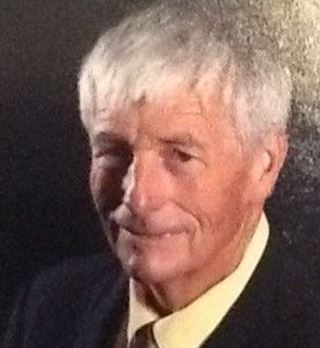 |
It is with sadness to
report the passing of a great railroader and union officer,
Lowell D. (Hawkeye) Wheeler passed away Friday, December 11, at
his home in Lakeland, Florida. Brother Lowell held Lodge 6760
together financially for many years serving as
Financial-Secretary/Treasurer. Each of his 20 plus annual audits
were presented to the Board of Trustees and accurate to the
penny. He knew where every dime of union funds were spent and
held each officer accountable for every dollar spent. Lowell
began is railroad career in 1967 in Montpelier, Ohio. He
transferred to Fort Wayne, Indiana in 1984 where he retired
August 31, 2008.
As a railway Carmen Lowell was known by all as Hawkeye, because
of his great interest in public safety by ensuring that no
freight car departed his train yard with a defect. He could spot
a thin flange freight train wheel before he knelt down to gauge
it. Lowell was well respected and considered one of the best
train yard inspectors on the system during his 41-year career.
He was a champion and will be missed.
Lowell D.
Wheeler, 67, passed away
Friday, December 11, 2015 at his home in Florida. Born in
Hudson, Michigan and living in New Haven, Indiana the past 30
years, Lowell worked as a
Railway Carman with Norfolk Southern Railway for over 40 years.
He served as an officer with Brotherhood of Railway Carmen and
Transportation Communication Union for over 20 years. Surviving
are his wife, Betty Jo(Berberick)Wheeler of Lakeland, FL; sons:
Larry A.(Heather) of West Unity, OH, Ronald L.(Barbara) of
Montpelier, OH, Eric J.(Elizabeth)of Stryker, OH, Jeremy
K.(Erica) of New Haven, IN, and James L.(Kym) of Lakeland, FL;
grandchildren: Connor, Brooke, Sydney, Christopher, Kaidan,
Matthew, Maggie, Brandin, and Luke; and sister, Troybelle Luce.
Lowell was preceded in death by
his parents, William "Donald" and Esther M. Wheeler; brothers,
Harley Wheeler and Leslie G.
Wheeler; and grandson, Brandon C.
Wheeler. Memorial Service will be held at
D.O. McComb Funeral Home in
June 2016. Memorials may be made to Fort Wayne Seventh Day
Adventist Church or Good Shepherd Hospice. To sign the online
guest book, go to
www.mccombandsons.com. |
|
For Release December 4, 2015 |
NORFOLK SOUTHERN BOARD OF DIRECTORS UNANIMOUSLY
REJECTS UNSOLICITED INDICATION OF INTEREST FROM CANADIAN PACIFIC
|
|
Canadian Pacific’s Indication of Interest is Grossly Inadequate and
Not in the Best Interests of Norfolk Southern and Its Shareholders
Transaction Would Face Substantial Regulatory Risks and
Uncertainties Highly Unlikely to Be Overcome
Norfolk Southern Confident That Its Strategic
Plan Will Deliver Compelling Shareholder Value
Company to Host Conference Call at 8:30 am ET Today
Norfolk,
Va., December 4, 2015 – Norfolk Southern Corporation (NYSE: NSC) (“Norfolk
Southern” or the “Company”) today announced that its board of directors
has unanimously rejected Canadian Pacific’s (TSX:CP)(NYSE:CP) previously
announced unsolicited, low-premium, non-binding, highly conditional
indication of interest to acquire the Company for $46.72 in cash and a
fixed exchange ratio of 0.348 shares in a new company that would own
Canadian Pacific and Norfolk Southern. After a comprehensive review,
conducted in consultation with its financial and legal advisors, the
Norfolk Southern board concluded that the indication of interest
is grossly inadequate, creates substantial regulatory risks and
uncertainties that are highly unlikely to be overcome, and is not in the
best interest of the Company and its shareholders.
“We
believe in our ability to generate greater shareholder value through
execution of our strategy – delivering efficient and superior service to
build a more profitable franchise based on price and volume growth,
implementing efficiency measures, and increasing returns on capital to
strengthen our financial performance, all while maintaining our
disciplined capital return strategy,” said Chairman, President and CEO
James A. Squires. “Norfolk Southern has made growth investments and we
expect to realize the benefits of these investments in the years ahead,
especially as our intermodal volumes continue to build. Specifically, we
expect to achieve an operating ratio below 70 in 2016 with additional
improvements over the next five years resulting in increasing ROE and an
operating ratio below 65 by 2020. By maximizing our asset utilization,
we believe we can achieve double-digit compounded EPS growth over this
period. In short, Norfolk Southern is well positioned to deliver
compelling value to our shareholders.”
Mr.
Squires continued, “There is a high probability that, after years of
disruption and expense, the proposed combination would be rejected by
the Surface Transportation Board (“STB”). We also believe the STB would
reject Canadian Pacific’s proposed voting trust structure, and that
there is no certainty that any other voting trust structure would be
approved. Even if the proposed combination were ultimately to be
cleared, it would be subject to a wide range of onerous conditions that
would reduce the value of the stock consideration that has been
proposed.”
Mr.
Squires concluded, “We believe that Canadian Pacific’s short-term,
cut-to-the-bone strategy could cause Norfolk Southern to lose
substantial revenues from our service-sensitive customer base. We also
believe the proposed transaction risks harm to vital transportation
infrastructure and the communities we serve. Any strategy that hurts our
customers and the broader community is highly unlikely to receive
regulatory approval and is inconsistent with the delivery of shareholder
value over the long-term.”
The
Norfolk Southern board, composed of 13 directors, 11 of whom are
independent, undertook a comprehensive review of the Canadian Pacific
proposal. The Norfolk Southern board, in making its determination,
considered among other factors:
The Canadian Pacific indication of interest substantially
undervalues Norfolk Southern
·
Norfolk Southern, under the direction of its board of
directors and a recently appointed Chief Executive Officer,
is successfully executing a strategic plan to drive operational
improvements. The board is confident that the continued execution of
this strategic plan is superior to Canadian Pacific’s grossly inadequate
and high-risk proposal
·
The board believes that Canadian Pacific’s indication of
interest is opportunistically timed to take advantage of a Norfolk
Southern market valuation that has been adversely affected by a
challenging commodity price environment, does not fully reflect
infrastructure investments Norfolk Southern has made, and does not
incorporate the upside from further improvements anticipated to result
from the initiatives that the Company is implementing.
Norfolk
Southern is successfully executing on its strategy
·
Norfolk Southern’s management team is successfully
executing a number of revenue growth initiatives focused on pricing
discipline and growth in merchandise and intermodal market
opportunities.
·
Norfolk Southern’s strategic plan is focused on providing
superior customer service, continuing the recent improvement in network
performance, and implementing efficiency measures, including managing
headcount, increasing locomotive productivity, and integrating
technological innovations.
·
Norfolk Southern’s strategic plan provides for
double-digit compounded EPS growth over the next five years, increasing
ROE, and, by 2020, an operating ratio below 65.
·
Norfolk Southern is committed to pursuing a disciplined
capital allocation strategy while investing appropriately in its
network. Over the past 10 years, since the inception of its share
repurchase program, the Company has distributed nearly $15 billion to
shareholders, consisting of an average of approximately $1 billion in
share repurchases per year and a steadily increasing dividend with a
10-year annual compound growth rate of 14%.
Transaction would face substantial regulatory risks and uncertainties
that are highly unlikely to be overcome
The
board believes that the proposed transaction is unlikely to be completed
given the substantial regulatory risks. Notably, any transaction must be
determined by the STB to both “enhance competition” and be
in the “public interest”.
Given
the extended review process of two years or more and the uncertainty of
approval, there would be significant disruption to Norfolk Southern’s
business and operations.
The
Norfolk Southern board also believes that in the event the transaction
did close, it would be only after the imposition of substantial
regulatory conditions compromising the potential benefits of a
combination and reducing the value of the proposed stock consideration.
There is
no certainty that the STB would approve a voting trust - the voting
trust structure proposed by Canadian Pacific is unprecedented and likely
would not be approved
·
Contrary to Canadian Pacific’s claims, a voting trust
under which a transaction would close prior to final STB approval of the
merger would not protect Norfolk Southern shareholders from regulatory
uncertainty. Under STB rules established in 2001, any voting trust would
require both a public comment period and approval by the STB based on a
finding that the voting trust itself is in the public interest. There is
no certainty that the STB would approve use of a voting trust.
·
The voting trust structure proposed by Canadian Pacific
is unprecedented, and it is highly likely it would be rejected by the
STB because the Canadian Pacific management team would control or be
substantially involved in the operations of Norfolk Southern prior to
receiving regulatory approval of the proposed merger transaction.
The
proposed transaction would be detrimental to Norfolk Southern’s customer
baseand communities
Canadian
Pacific’s unilateral open access proposal would undercut the financial
performance of the combined entity as well as degrade service and dis-incentivize
investment.
Any
strategy that adversely impacts Norfolk Southern’s service-sensitive
customer base and communities is unlikely to receive regulatory approval
and is inconsistent with the delivery of shareholder value over the
long-term.
Canadian
Pacific’s synergy targets are overstated and imply significant reduction
in investment to maintain service
Canadian
Pacific’s overstated synergy targets imply significant reduction
to investment and employment levels, which the board believes would
harm service levels and would be unacceptable to the STB.
Operating synergies are limited because the Canadian Pacific and Norfolk
Southern networks serve entirely separate regions and only connect at
five points.
Any
near-term cost savings that might result from applying Canadian
Pacific’s short-term focused operating model on Norfolk Southern would
be offset by traffic diversions, service deterioration and loss of
service-sensitive customers.
Open
access has been widely documented to produce negative revenue synergies
from traffic loss and rate compression while also increasing operating
costs.
The
transaction would not help Chicago congestion issues
·
As the smallest Class 1 railroad in Chicago,
accounting for less than 5% of all Chicago rail traffic, Canadian
Pacific’s volumes are too small to impact Chicago rail traffic.
·
The proposed transaction would likely increase Chicago
congestion.
o
Less than 15% – or less than one train per day –
of current
Canadian Pacific-Norfolk Southern connecting traffic can be efficiently
rerouted around Chicago.
o
Further, Norfolk Southern believes that the proposed
transaction would cause more, not less, traffic congestion in Chicago.
We expect Canadian Pacific would increase revenues by converting
interline traffic between Norfolk Southern and both BNSF Railway
(“BNSF”) and Union Pacific (“UP”) to single-line traffic in the proposed
Canadian Pacific-Norfolk Southern system. Much of this Norfolk Southern
traffic with BNSF and UP avoids Chicago today. Unlike BNSF and UP,
Canadian Pacific does not have efficient Chicago bypass routes, so
Canadian Pacific would have to route most of this traffic through
Chicago.
Not only
do the lines of Canadian Pacific and Norfolk Southern not physically
connect in Chicago, but neither company’s traffic can be moved to other
Canadian Pacific-Norfolk Southern connecting points without all
constituencies incurring substantial extra miles, cost and time.
|
|
For Release June 20, 2015
200 New Jobs Coming to Marion, Ohio UTLX |
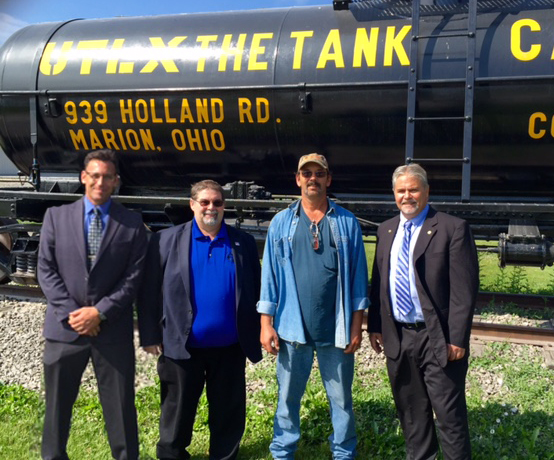 |
From Left to right; Local Chairman Chris Pierce, TCU
National representative Carl Lakin, Local Representative Troy Meadows
and Carmen Division General Vice President Don Grissom |
|
Marion, Ohio – June 20, 2015, Union Tank Car Co. has announced it will
add a second facility in Marion, creating 200 new jobs over the next
three years, a company news release issued through Columbus 2020
announces.
The Chicago-based company, which services and repairs railroad tank cars
used primarily by the chemical, petrochemical and food industries, noted
that its commitment will double the size of the workforce it currently
employs at its Holland Road facility near Marion.
On
Monday, the Ohio Tax Credit Authority approved a 55 percent, five-year
tax credit to Union Tank Car for the creation of $8,272,000 in new
annual payroll as a result of the company's expansion project in the
city of Marion. As part of the tax credit agreement, the authority
requires the company to maintain operations at the project location for
at least 11 years.
Greg Cieslak, Union Tank Car group president, states in a news release
from the company: "We have a quick need to expand into a second facility
due to the industry's changing landscape, and found the Columbus Region
to be a strategic location to grow. The area offers access to the right
workforce and real estate to fit our needs, and the Midwest location and
rail infrastructure are convenient to our customers."
New federal guidelines regarding the service of ethanol and crude oil
tank cars prompted the company's expansion, the release states. A second
facility will be used to upgrade the tanks and safety measures on Union
Tank's existing fleet of tank cars to meet the new regulations. Union
Tank Car's new facility will be at 1207 Cheney Ave. The company's
investment will include machinery and equipment and infrastructure costs
at the new location. Union Tank Car will maintain its existing facility,
at 939 Holland Road.
The project involves expanding operational capacity, according to the
Ohio Tax Credit Authority. The company's fixed asset investment would be
toward leasehold improvements, expanding an existing building, on-site
infrastructure improvements, and new machinery and equipment. Ronald
Meade, administrator for Ohio Means Jobs-Marion County, said the pay
range for the new jobs will be $15 to $21 per hour, with a "great
benefits package," including medical, dental and life insurance.
Those interested in applying for work at Union Tank Car are asked to do
so through Ohio Means Jobs-Marion County. The jobs available are welders
and fabricators, tank car repairers, rail car switchmen, material
handlers, and general labor and helpers, who must have a general welding
knowledge. Bruce Winslow, Union Tank Car spokesman, said the performance
of the company's Holland Road site added to the attractiveness of Marion
as the location for a second facility.
"We do have a track record in Marion," Winslow said. "We do have a very
successful shop there." Matthew Dietrich, executive director of the Ohio
Rail Development Commission, states in the release: "We're happy to
partner with Union Tank Car Company on its expansion and help secure
some of the funding to take this project from dream to reality."
The ORDC is offering a $75,000 grant to defray rail improvement costs
on-site, helping to enable the company to reactivate the rail line at
the Cheney Avenue site and to establish rail service, said Julie
Kaercher, ORDC spokeswoman. As part of its investment, Union Tank Car
Co. has committed to adding 200 jobs to its existing roster of employees
in Marion. The new jobs will include welders and technicians.
Union Tank Car is partnering with Tri-Rivers Career Center on a
workforce development program to train applicants to fill the new
positions. The training effort, led by Tri-Rivers Career Center, will be
specific to the skills Union Tank Car requires for this project.
Tri-Rivers Career Center is investing significant funds for new
equipment related to the project, and Ohio MeansJobs-Marion County will
provide funds specific to the training aspect, the release states.
Chuck Speelman, Tri-Rivers Career Center superintendent, said he and a
Tri-Rivers welding instructor, along with an Ohio Means Jobs-Marion
Countyofficial, met Ted Graham, who owns the Cheney Avenue property
being leased to Union Tank Car, at a Union Tank Car facility in Sheldon,
Texas, about three weeks ago.
He
said they made the trip to see the process in which workers at the new
facility would need to be trained. "They were impressed with our
facility and the fact we're training both adults and high school
students beyond the specifications that they need," Speelman said. "We
had some discussions about exactly what it was they needed, then we took
a trip down to their facility just outside of Houston, Texas. ... Our
high school students and adults are well-equipped to do that process."
Tri-Rivers purchased 10 pulsating welders to train its students on the
equipment the company will use, he said, adding that the $90,000
investment will be paid out of equipment money the school receives from
the state. "We'll be looking at adding space or renovating space to be
able to do this, because right now we have limited space during the
day," he said. He said the new space would accommodate night and weekend
training.
Meade said Ohio Means Jobs-Marion County will reimburse each eligible
hire at Union Tank Car up to 50 percent of their on-the-job training
wages up to a maximum of $8,000.
Initial screening will take place at three locations — Ohio Means
Jobs-Marion County, Tri-Rivers Career Center and Union Tank Car — all
applicants meeting eligibility requirements and successfully completing
training guaranteed an interview with the company. That process is
expected to begin in July. For more information regarding applying for
jobs, call Ohio Means Jobs-Marion County at 740-382-0076.
Gus Comstock, Marion CAN DO! director, said Marion "was an ideal
location for Union Tank," in part because of its access to rail. "Rail
is a part of the community's heritage, and Marion is just genetically
programmed for workers to make big things," Comstock said. He said the
availability of welding training at Tri-Rivers is the "other thing that
sets Marion apart." Comstock praised the cooperation of many entities in
helping to convince Union Tank Car to add its new facility in Marion,
adding that the new facility will use a rail spur that also connects to
Nucor Steel Marion.
"What I'm most impressed about is how everybody seems to be coming
together; let's just keep the community moving forward," he said.
At
the new facility, Union Tank Car has set a goal of "rewrapping" 60 tank
cars each week "when it's at full capacity, but that won't happen right
away," Speelman said. "There will be a transition period to get to that
point." He said in the rewrapping process the tank cars will be wrapped
in heat-resistant fiberglass, with heavy steel plate also installed as
reinforcement. The measures are intended to reduce the consequences of
derailments. "Once again, I think this is an example that when you
invest in people and training in a community good things happen," he
said.
Ken Stiverson, president, Marion County Board of Commissioners, said:
"Our centuries-old rail road history and modern infrastructure make this
an ideal project for the Marion community."
For more than 120 years, Union Tank Car has been a leader within the
community of builders, lessors and shippers of railroad tank cars,
working with customers to provide practical solutions to industry needs.
In addition to its two manufacturing facilities in Louisiana and Texas,
the Chicago-based company operates a major network of repair shops and
lining shops, including a location in Marion. Its repair and inspection
resources also include more than 60 dedicated On-Site mini shops and
mobile repair locations.
Union Tank Car is a Marmon Group/Berkshire Hathaway company. For more
information about Union Tank Car, visit UTLX.com.
UTLX employees are represented by The Brotherhood Railway Carmen Divsion
of TCU/IAM and are members of TCU Heartland Lodge 6760, www.tcu6760.com.
How to apply:
Anyone wishing to apply for the new jobs being created with the addition
of a second Union Tank Car Co. facility in Marion is asked to send a
resume to Ohio Means Jobs-Marion County, 622 Leader St., or to attend an
open job recruitment fair, which will be from 10 a.m. to 3 p.m. June 10
at Ohio Means Jobs Marion County. For more information call Ohio Means
Jobs-Marion County at 740-382-0076.
|
|
For Release April 30, 2015
Heartland Lodge 6760 Local Chairman
Christopher Pierce Delivers His Representational Goals to the Membership |
Read Local Chairman Pierce's message
Here
|
|
For Release March 12, 2015
The House Passes Amtrak Funding |
The House recently passed Amtrak
reauthorization legislation, The Passenger Rail
Reform and Investment Act H.R.749, authorizing
nearly $8 billion in funding for Amtrak that
would expire in 2019. The 316-101 vote badly
divided Republicans, as all of the no votes came
from firebrand conservatives. The Bill wouldn't
have passed except for the support of all House
Democrats.
The conservative group Heritage
Action for America pressured Republicans to
oppose the Bill.
TCU lobbied hard to convince our
friends on both sides of the isle to reject an
amendment that would have zeroed out all Amtrak
funding and destroyed thousands of good
middle-class Amtrak jobs. By voting against the
McClintock amendment, members of Congress
rejected the notion that the United States
should not have a national passenger railroad.
The White House issued a
statement supporting the Bill but called for
increased spending for Passenger Rail. The
Senate must now approve the measure in order to
reach President Obama's desk.
The House Bill authorizes about
$982 million per year for Amtrak’s long distance
service and another $470 million annually for
the Northeast Corridor. The bill sets another
$300 million per year for capital improvements
on Amtrak routes in the rest of country and
about $24 million per year for the company's
inspector general.
Amtrak’s subsidies have been
hotly contested in Congress in recent years.
Congressman Mica of Florida pushed to privatize
service on the Northeast, arguing that
nongovernment entities could operate trains more
efficiently then Amtrak. TCU was able to help
beat back the Mica amendment in Committee.
“This nation has significant
transportation challenges ahead, and Amtrak
looks forward to working with leadership to
ensure intercity passenger rail will keep people
and the economy moving,” said Amtrak in a
statement.
Amtrak employees can take comfort in the fact
House Republicans did not drastically cut
Amtrak’s funding in light of budget constraints
imposed by the majority.
|
 |
For
Release January 21, 2015
Union Family mourns loss
Detroit,
Michigan, January 21, 2015 - It is with deep sadness that we
report the passing of Blake Bowman. Blake is the son of Carman
Brian Bowman. Blake, a 14-year old champion lost his fight with
cystic fibrosis today. Blake enjoyed many sports. At the top of
his list was fishing with his dad. Lodge 6760's officers
and members offer our prayers and deepest sympathies to the
Bowman family. A fund has been created to help the family offset
medical costs. To learn more about
Blake and the fund created for him please view his page at:
www.gofundme.com/kkgmeo. |
For
Release December 31, 2014
Mike Bleser Steps Down as President
Chris Pierce Becomes the 14th President of Lodge 6760
Detroit, Michigan,
December 31, 2014 - Over the past four years Mike Bleser has served as
the 13th President of Heartland Lodge 6760. During his tenure
in office the lodge has increased its membership over 100%. With over 500
members the lodge is now the second largest lodge in the United States.
Mike has spent many hours and driven thousands of miles to ensure that
members at all ten of the major points in the lodge, spreading over a
510-mile diameter, have an equal opportunity to attend lodge meetings by
taking the meetings to the members. Lodge 6760 is the only lodge in the
country to rotate its monthly meetings from one point to another. In
2012 Mike was instrumental in changing the name of the lodge so it
better reflects its current jurisdiction. Mike has put his heart and
soul into the lodge over the past four years.
Today, Mike is stepping down as Lodge President. His skills and
knowledge will be missed; however, he will still be active as he has
accepted an appointment to the office of Board of Trustees.
Thank you Mike for your
dedication and stewardship.
Fort
Wayne, Indiana –
Heartland Lodge 6760 is pleased to announce that Christopher Pierce has
become the 14th president of the lodge. President Pierce
began his rail career in the late 1980s employed by Triple Crown. On
March 12, 1990, Chris transferred to Norfolk Southern as a Student
Carman at Fort Wayne. After earning his journeyman status, Brother
Pierce became skilled in the craft and dedicated himself to learning
every facet of the trade. He did it all with vigor and pride. When
transferred to train yard inspection duties, Chris took the rule books
home with him to study. In a short time he knew every rule and inspected
every train by the book.
As
time passed and senior carmen retired, Chris realized that the lodge
needed some younger members to step forward to lead. Chris took on that
challenge as well. In 2013 he became Vice President of the lodge. Under
the direction of President Mike Bleser, Chris traveled to various points
of the lodge to meet the members and listen to their concerns.
Brother Pierce is a dedicated husband, father, employee and officer.
When on the job he is all business. As president of the lodge members
can expect the same dedication and respect that Chris has displayed
during his 25-year rail career.
Congratulations
President Pierce, the lodge stands behind you.
For
Release December 17, 2014
Railroad Retirement COLA & Taxes for 2015
Chicago, Illinois - Effective January 1, 2015 railroad
retirees will receive cost of living adjustments of 1.7% on Tier I
benefits and .6% on Tier II benefits. For details on all creditable and
taxable compensation under Railroad Retirement
view the complete list.
For Release November 15, 2014
Lodge 6760 Welcomes New Member
Fort
Wayne, Indiana - Lodge 6760 is pleased to welcome Dan Welty into the
lodge. Brother Welty recently transferred from Elkhart Indiana. He is
now working at the Car Shop at East Wayne Yard in Fort Wayne. Vice
President Chris Pierce describes Dan as a member who exhibits traits of
a true leader and one interested in furthering his craft.
Lodge Financial Secretary
Treasurer
Kevin Hite becomes a father |